Introduction
Every day an asphalt shingle is installed, it begins to lose its protective oils, whether anyone notices or not. Underneath the surface it’s a slow chemical shift going on. By the time you see curling edges or bare patches, the roof has often been failing quietly for years, making what could have been a simple fix into far more invasive work. Hanley Construction helps homeowners catch that shift early, through roof restoration with Roof Maxx or a full roof replacement when it’s already too late to save.
This guide breaks down how asphalt shingles actually age, what Roof Maxx does at a molecular level to reverse that process, and when a full residential roofing replacement becomes the smarter long-term call. It also covers what a professional roof inspection examines, so homeowners can decide with facts instead of guesswork.
What Is Roof Maxx?
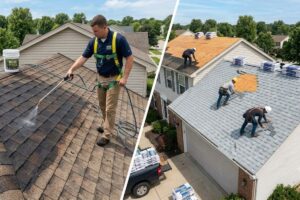
Roof Maxx is a plant-based oil treatment built for aging asphalt shingles that are still structurally sound, not a sealant or coating sitting on top of the roof. It absorbs directly into the shingle using Soy Methyl Ester Emulsion technology, a soy-derived oil that mimics the petrochemical oils used when shingles were first manufactured. Carrying USDA BioPreferred certification at roughly 86% biobased content, it’s become one of the more practical tools in modern roof maintenance.
What Is a Full Roof Replacement?
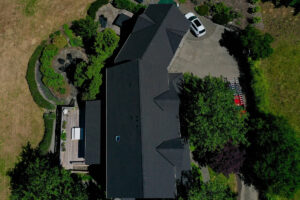
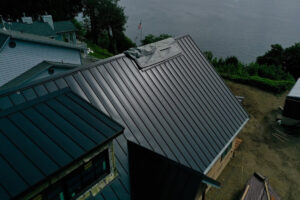
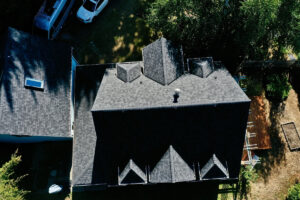
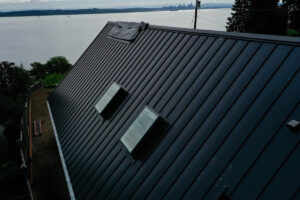
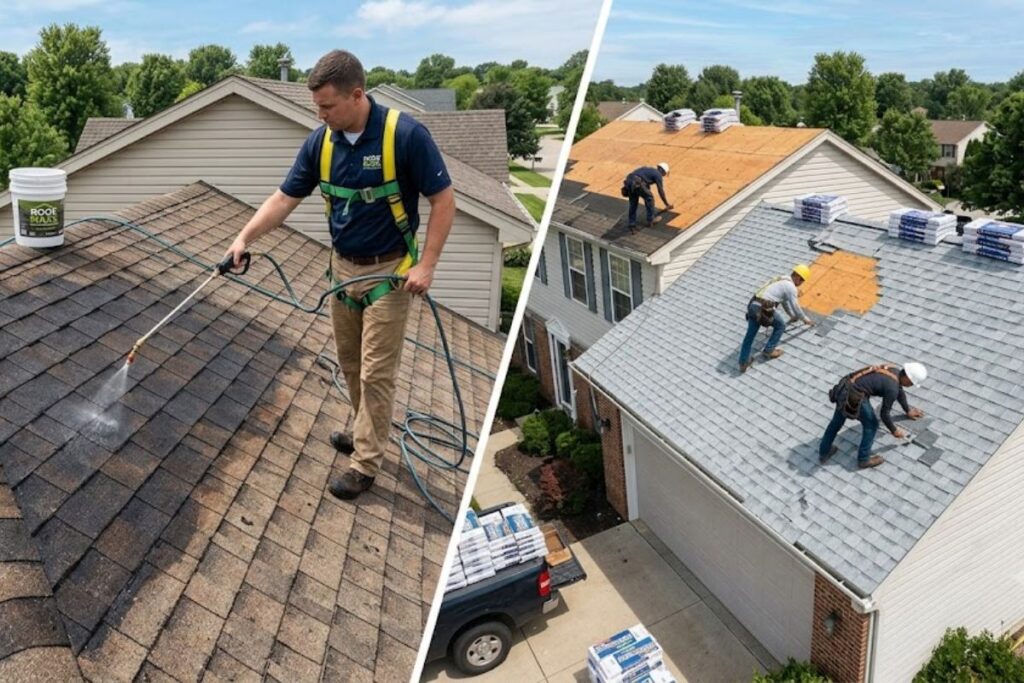
A full roof replacement means stripping the roof down to the decking and starting fresh, new underlayment, new flashing, and new shingles or roofing material throughout. It’s the right call once the asphalt mat itself is exposed, the decking has soft spots, or repeated asphalt shingle roof repair patches stop holding. At Hanley Construction, we do replacements in asphalt, metal, cedar shake, and other materials that are consistent with the structure and exposure of your home.
How Roof Maxx Works to Extend Roof Life?
Most people assume a roof simply wears out with age. In fact, the decline is part of a predictable chemical pattern, one that the paving industry had known about and treated for decades before it ever reached residential roofs.
Why Shingles Dry Out From the Inside
When asphalt shingles are manufactured, they’re saturated with petrochemical oils that keep the material flexible and able to expand and contract with temperature swings. UV exposure, wind, and seasonal changes slowly evaporate those oils. Highway departments have used nearly identical rejuvenation techniques on asphalt pavement for years. Roof Maxx adapts that same approach to roof rejuvenation for residential shingles.
What Happens During Treatment
Roof Maxx’s soy-based microbeads are sprayed across the entire roof and absorb into the shingles within about 30 minutes, replacing oils lost over the years. It needs dry conditions and temperatures above 36 degrees Fahrenheit and, unlike a tear-off, is completed in hours rather than the week or more a replacement typically takes.
A Roof’s Hidden Timeline
Here’s what’s usually happening under the surface of a shingle at each phase, often long before anything looks wrong from the ground:
| Roof Age | Beneath the Surface | What You’ll Notice |
| 0–7 years | Oils intact, shingles fully flexible | Roof looks new |
| 8–12 years | Oils begin evaporating, granules loosen | Granules in gutters, slight fading |
| 12–18 years | Shingles stiffen, hairline cracks form | Curling edges, brittleness underfoot |
| 18+ years | Asphalt mat exposed, waterproofing fails | Leaks, dark streaks, visible wear |
When Roof Maxx May Be a Better Option
The optimal window for Roof Maxx is when a roof starts losing oils but before the asphalt mat itself is exposed, which is usually years 8 through 18 for most asphalt shingle roofs. If a recent roof inspection confirms the shingles remain structurally sound, a single application can restore flexibility for up to five years. Repeat treatments roughly every five years can add up to fifteen years of service life overall.
When a Roof Replacement Is Necessary
When shingles break through to the asphalt mat or granule loss exposes large areas to direct UV, rejuvenation can no longer undo that damage, because the material itself has broken down. The same applies after major storm damage, when wind has lifted or torn shingles loose, or when residential roof repair has already been attempted on the same section more than once without holding. At that point, a full roof replacement protects the structure before water reaches the decking and framing.
A roof doesn’t wait for a convenient moment to fail. Shingles that have already lost their flexibility can give out during a single winter storm, turning what might have been a planned project into an emergency tear-off in the worst possible weather.
Cost Comparison: Roof Maxx vs Roof Replacement
The two options differ dramatically in scope, time, and impact, without detailing specific pricing:
| Factor | Roof Maxx | Roof Replacement |
| Project length | A few hours | Several days to a week |
| Roof condition needed | Aging but sound | Any condition, including failing |
| Life added | Up to 5 yrs (15 with reapplication) | 15–30+ yrs by material |
| Warranty | 5-year transferable | Covers materials for as long as owned |
| Waste created | Existing shingles stay in place | Old roofing removed and disposed |
For a roof that still qualifies, roof rejuvenation is far less disruptive, though it only works inside that narrow window before decline sets in.
Benefits of Roof Maxx for Homeowners
Beyond extending lifespan, Roof Maxx offers practical advantages:
- Restores flexibility, water resistance, and granule adhesion close to original levels
- Soy-based and USDA BioPreferred, safe around pets, plants, and people
- Keeps existing shingles out of landfills instead of adding to roofing waste
- Improves resistance to wind and hail through restored shingle elasticity
- Backed by a 5-year transferable warranty, even if the home is sold
How to Decide Which Option Is Right for Your Home?
Three questions tend to settle this quickly: is the roof still within about 20 years of installation, has the asphalt mat become visible through worn granules, and have repairs been needed on the same section more than once? A “yes” to the last two usually points toward roof replacement; a “no” across the board makes roof rejuvenation worth exploring first.
Why Professional Roof Inspections Matter
Usually, a trained eye can tell in a matter of minutes whether a roof has years left in its current shingles or whether that window has already closed.
What Our Inspections Cover
Our team checks granule wear and shingle flexibility, flashing around chimneys and vents, decking condition from inside the attic, and ventilation balance, all factors that determine whether Roof Maxx will hold or whether residential roofing materials need to come off entirely. We tell homeowners directly which category their roof falls into, with no pressure toward either option.
Restore, Rejuvenate, or Replace: What’s Next for Your Roof
Every asphalt shingle roof runs on the same chemical clock; oils evaporate, flexibility drops, and eventually the asphalt mat itself is exposed to the elements. Roof Maxx, when used early, can buy you years of time, and at that point, theroof replacement is the right decision after the underlying material has failed. The choice is based solely on the stage that a roof is in at the time.
Hanley Construction has spent over 40 years helping homeowners figure out exactly which stage that is, offering roofing services that range from roof inspection and Roof Maxx applications to full roof replacement in asphalt, metal, cedar shake, and more. From Port Orchard to Bainbridge Island and Bremerton to Poulsbo, our crews are a familiar sight, also serving Silverdale, Gig Harbor, Kingston, Hansville, Port Ludlow, Port Gamble, Belfair, Fox Island, Olalla, and Suquamish.
If your roof is somewhere between “looks fine” and “needs help,” an inspection is the fastest way to know which side of that line it’s on. Call Hanley Construction at 1-866-533-6409 to schedule yours.